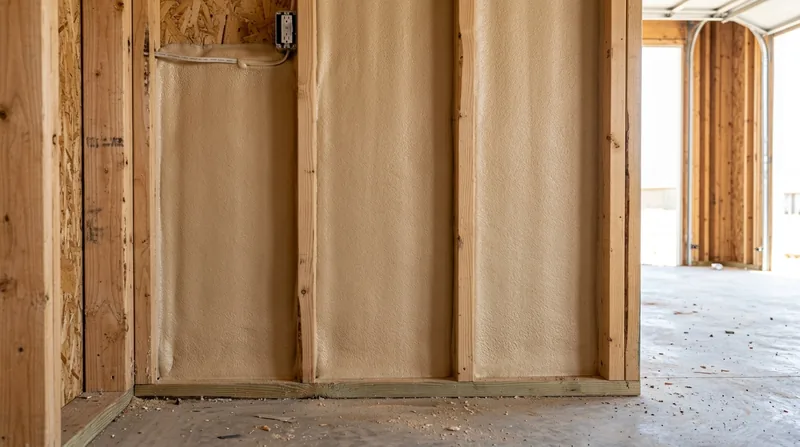




Closed cell spray foam insulation in Lubbock is rigid foam that seals tight and holds up in the dry South Plains climate. Lubbock's brick ranches from the 1950s-70s and newer slab-on-grade homes all face the same problem: attics that turn into ovens when summer heat climbs toward 100 degrees, ductwork baking inside vented attics, and wind-driven dust finding every gap in walls and top plates after a dust storm. Closed cell foam adds structural strength, air-sealing performance, and moisture control that open cell cannot match. We have been installing spray foam insulation in Lubbock since 2009, and we know the specific failure modes that hit this region hardest. This page explains why closed cell matters here, how the work is done, what it costs, and how to hire a contractor you can trust.
Why Closed Cell Spray Foam Insulation Matters in Lubbock's Hot, Dry Climate
Lubbock sits on the flat South Plains at elevation 3,200 feet, with summer temperatures regularly exceeding 95 degrees and winter cold snaps dropping into the teens. Homes here are almost universally slab-on-grade, meaning the attic is the primary thermal boundary, and it is vented. That vented attic exchanges air with the outside, so in summer it becomes a convection oven. Ductwork running through that space loses cooling before it reaches the rooms. Wind-driven dust from the cotton fields and surrounding plains finds cracks in walls, rim joists, and around penetrations. Closed cell foam seals those paths and adds rigid insulation value without relying on air circulation or moisture vapor management the way open cell does.
- Closed cell foam creates a rigid, structural shell that resists wind-driven air infiltration and dust penetration common after West Texas dust storms.
- At roughly R-6 per inch, closed cell delivers higher R-value density than open cell, so a 2-inch pour in an attic gives you R-12 plus air sealing in one pass.
- The foam cures to a closed-cell structure that does not absorb moisture, critical in sealed attics and around rim joists where condensation can form.
- Closed cell adds racking strength to the building envelope, a benefit when you are reinforcing rim joists or bracing walls against wind loads on the South Plains.
These properties make closed cell the right choice for attics you want to seal tight, rim joists that take wind pressure, and walls where air sealing is the goal.
Key info: Lubbock's summer cooling season runs from May through September, with peak attic temperatures in July and August reaching 140 to 160 degrees in a vented attic. A sealed attic with closed cell foam stays 20 to 30 degrees cooler, reducing the load on your air conditioning unit and cutting ductwork losses. Winter cold snaps arrive December through February, when wind-driven infiltration through walls and rim joists accounts for measurable heating loss.
For more context on how attic insulation fits into a broader strategy, see our page on attic spray foam insulation in Lubbock.
How We Install Closed Cell Spray Foam Insulation in Lubbock
Installation begins with a site assessment to identify the substrate, measure the space, and confirm what R-value and thickness you need. We produce written estimates that specify the R-value and thickness in inches, so you know exactly what you are getting. The job itself follows a controlled process: we set up mechanical ventilation during the spray, apply the foam in passes that do not exceed the manufacturer's recommended thickness per pass, and monitor drum temperature and mix ratio to ensure proper cure. Once the foam cures, we allow a re-entry window of 24 to 48 hours before occupants return, and we provide guidance on any odor or off-gassing you may notice.
- We inspect the attic or wall cavity for leaks, moisture, or contamination, and we address those before any foam goes down.
- We install mechanical ventilation during the spray to manage fumes and ensure safe conditions for our crew and your home.
- We apply closed cell foam in controlled passes, respecting the manufacturer's maximum thickness per pass and drum temperature specifications.
- We allow the foam to cure fully before we leave the site, and we communicate the re-entry window clearly so you know when it is safe to occupy the space.
- We clean up all equipment and debris, leaving the site ready for any additional work such as drywall, tape, or finishing.
This methodical approach prevents the odor and cure problems that come from rushed installation, oversized passes, or poor ventilation.
Local example: A brick ranch in central Lubbock with a 1,200-square-foot attic and original fiberglass that had settled to R-2 takes roughly 4 to 6 hours to spray with 4 inches of closed cell foam, delivering R-24 plus complete air sealing. A rim joist retrofit on a slab-on-grade home in Shallowater, wrapping the band joist and rim to seal out wind and dust, typically takes 1 to 2 days depending on the linear feet and whether you are also sealing band joists on multiple sides.
Learn more about rim joist and band joist spray foam insulation if your home has exposed rim joists or band joists that need air sealing.
Closed Cell Spray Foam Applications and Approaches
| Application | Description | Best for |
|---|---|---|
| Attic Insulation and Sealing | Closed cell foam sprayed on the underside of roof decking or on the attic floor to create a sealed, conditioned attic or to top up existing fiberglass with air sealing. | Homes with vented attics that overheat in summer or lose cooling through ductwork. Sealed attics in new construction or retrofit. |
| Rim Joist and Band Joist Sealing | Closed cell foam applied to the rim joist, band joist, and the cavity between the rim and the top of the foundation wall to block wind and dust infiltration. | Slab-on-grade homes in Lubbock and the surrounding South Plains where wind-driven dust is a problem and HVAC ductwork runs near the rim. |
| Wall Cavity and Injection Foam | Closed cell foam injected into existing wall cavities or sprayed into open cavities before drywall is hung, sealing the entire wall assembly against air infiltration. | Retrofit of older frame houses near Texas Tech and in central Lubbock neighborhoods where walls are drafty. New construction and remodels. |
| Metal Buildings and Barndominiums | Closed cell foam sprayed on the interior of metal roof panels and walls to provide insulation and condensation control on the cold metal surface. | Metal shops, equipment buildings, and converted barndominiums in Idalou, Slaton, and the cotton-country areas where condensation on steel is a persistent problem. |
Closed Cell Spray Foam Insulation Cost in Lubbock: What to Expect
Closed cell spray foam typically starts at $1.20 per board foot for standard attic or rim joist work in Lubbock. The final cost depends on several factors: the size of the area being sprayed, the depth of foam required to hit your R-value target, access to the space, whether you are spraying a new attic or retrofitting existing insulation that must be removed first, and the complexity of sealing penetrations and edges. A small rim joist job on a single-story ranch might run $800 to $1,500. A full attic retrofit on a 1,200-square-foot footprint with removal of old fiberglass and spray of 4 inches of closed cell typically ranges from $2,500 to $4,200. Metal building or barndominium work varies widely based on square footage and height.
We provide written estimates that detail the R-value and thickness in inches, so you see exactly what you are paying for. We recommend getting 2 to 3 estimates from different contractors to compare. Watch for estimates with no R-value specified, no thickness listed, prices far below market, or contractors who promise immediate re-entry without a cure window. Those are red flags for poor installation. For detailed pricing and examples, visit our pricing page.
What to Look for When Hiring a Closed Cell Spray Foam Insulation Contractor Near Lubbock
The spray foam trade has rig-and-run crews (out-of-state trailers that spray a job in an afternoon and disappear) and national franchises, alongside local shops that stand behind their work. The local independent is your best bet if they show expertise, transparency, and accountability. When you call a contractor, ask for a detailed written estimate with R-value and thickness specified. Ask whether they carry full insurance and whether they can provide a certificate of insurance before work begins. Confirm that they understand what permits or registrations your city or county requires before they start. Ask for references from recent jobs in Lubbock or nearby towns like Shallowater, Wolfforth, or Levelland. Ask how they handle the cure window, what odor or off-gassing to expect, and what the re-entry timeline is. A contractor who answers these questions clearly and honestly is the one to hire.
- Verify that the contractor is fully insured and can provide proof of insurance before work begins.
- Ask for a written estimate that specifies the R-value, foam thickness in inches, and the total square footage or board feet being sprayed.
- Request references from at least two recent jobs in Lubbock or the surrounding service area, and follow up by calling those homeowners.
- Confirm that the contractor understands local permit requirements and will help you navigate what your city or county requires.
- Ask about the cure process, the re-entry window, and what odor or off-gassing you should expect so you are not surprised after the job is done.
- Get clarity on cleanup, drywall repair, and any finishing work that is included or excluded from the estimate.
A contractor who provides all of this information upfront is demonstrating the professionalism and transparency that separates a quality local shop from a quick-flip operation. For a free estimate with no obligation, contact us and we will walk you through the process.
Closed Cell Spray Foam Insulation in Lubbock: Pricing Guide
| Service | Price | Details |
|---|---|---|
| Attic Insulation and Sealing | Starting at $1.20/board ft | Closed cell foam sprayed on attic floor or roof deck, including air sealing around penetrations and edges, measured on site |
| Rim Joist and Band Joist Sealing | Starting at $1.20/board ft | Closed cell foam applied to rim and band joists around the perimeter, sealed against wind-driven dust and infiltration on slab-on-grade homes |
| Wall Cavity and Injection Foam | Starting at $1.20/board ft | Closed cell foam injected into existing walls or sprayed into open cavities before drywall, sealed for air infiltration control in retrofits and new construction |
| Metal Building or Barndominium Insulation | On estimate | Closed cell foam sprayed on interior of metal roof and walls for condensation control and insulation, requires site assessment for square footage and height |
| Insulation Removal and Replacement | On estimate | Removal of existing fiberglass or failed foam before closed cell retrofit, cost depends on volume and disposal method |
| Free Estimate | No obligation | Written estimate with R-value and thickness specifications, response within 24 hours at (806) 853-5452, covers Lubbock and surrounding areas |
Indicative pricing, the exact cost depends on square footage, finish, and site access. Free personalized estimate within 24h at (806) 853-5452.


