Why Mid-Century Brick Ranches in Lubbock Need Better Insulation
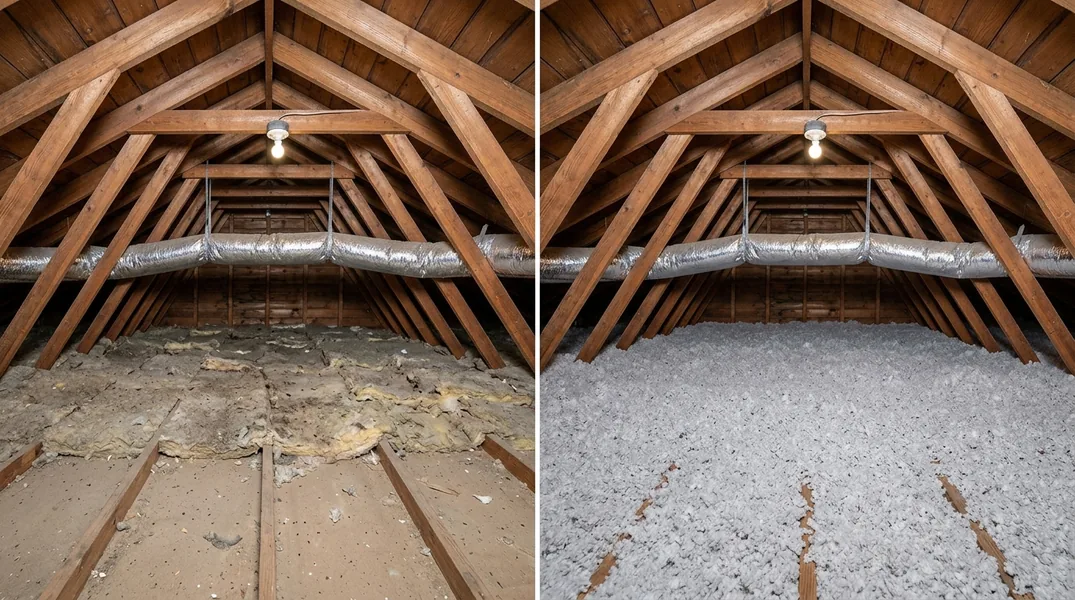
The classic mid-century brick ranch homes that dot Lubbock are architectural treasures. Built with solid bones and timeless charm, these homes represent a golden era of residential construction. However, many were designed and built with insulation standards that no longer meet modern comfort or energy efficiency expectations. The attics of these homes often contain minimal fiberglass batts, settling insulation, or gaps that have widened over decades of seasonal temperature swings.
The Texas Panhandle's climate is demanding. Summers in Lubbock regularly exceed 95 degrees Fahrenheit, while winters can drop below freezing. This dramatic temperature variation means your HVAC system works overtime to maintain comfort, driving up energy bills and wearing out equipment faster. Older brick ranches, with their poor attic insulation, lose conditioned air through the roof at an alarming rate. Homeowners often find themselves paying 20 to 40 percent more on heating and cooling than they should.
The good news is that upgrading your attic insulation doesn't require tearing down your home's character or structure. Attic Spray Foam Insulation offers a modern solution that fits seamlessly into older homes, providing superior thermal performance while respecting the original architecture of your property.
Is Spray Foam Insulation Worth It? The Real Value Proposition
When homeowners ask 'is spray foam insulation worth it,' they're really asking two questions: will it save me money, and will it last long enough to justify the investment? The answer to both is yes, but with important caveats. Spray foam insulation delivers an R-value per inch that traditional fiberglass cannot match. Where fiberglass batts offer roughly R-3.5 to R-3.8 per inch, spray foam delivers R-6 to R-7 per inch depending on the type. This means you can achieve superior insulation performance in the same space, or meet your thermal goals with less material.
For mid-century brick ranches in Lubbock, this translates into measurable energy savings. Most homeowners report 15 to 30 percent reductions in heating and cooling costs after upgrading to spray foam. Over a 20 to 30 year lifespan, that adds up to thousands of dollars. Additionally, spray foam doesn't settle, compress, or lose effectiveness over time the way fiberglass does. It creates an air seal that reduces drafts and moisture infiltration, which protects your home's structure and indoor air quality.
The upfront cost is higher than traditional insulation, but when you factor in the energy savings, extended HVAC equipment life, and improved comfort, the return on investment typically occurs within 5 to 8 years. For homeowners planning to stay in their property long-term, spray foam insulation is a sound financial decision.
Is Spray Foam Insulation Safe? Understanding Off-Gassing and Installation
Safety concerns around spray foam insulation are legitimate and worth addressing directly. The primary concern homeowners raise is off-gassing, the release of volatile organic compounds (VOCs) during and after application. Here's what you need to know: during the spray application process, the chemical reaction between polyol and isocyanate creates heat and releases odorous compounds. This is normal and expected. The smell can be strong, but it dissipates within 24 to 48 hours in most cases, especially with proper ventilation.
After the foam has fully cured (typically 24 hours), off-gassing essentially stops. The foam itself becomes inert and poses no ongoing health risk. However, the key word here is 'cured.' This is why professional installation matters enormously. Improper mixing ratios, inadequate temperature conditions, or rushed application can result in incomplete curing and prolonged off-gassing. When you hire Lubbock Spray Foam Insulation, our technicians follow manufacturer specifications precisely, ensuring your foam cures completely and safely.
The isocyanate component does require careful handling during application. Workers must wear appropriate respiratory protection, which is why DIY spray foam application is not recommended. Professional installers are trained and equipped to handle these materials safely. Once installed and cured, the foam poses no health risk to occupants. In fact, by sealing air leaks and reducing moisture infiltration, spray foam actually improves indoor air quality by preventing mold growth and dust infiltration.
Spray Foam Insulation Pros and Cons: A Balanced Look
Like any building material, spray foam insulation has genuine advantages and real limitations. On the pro side, the benefits are substantial. Spray foam delivers superior R-value per inch, creates an excellent air seal, doesn't settle or degrade over time, and provides moisture resistance that protects your home's structure. It fills irregular cavities and hard-to-reach spaces where fiberglass simply cannot go, making it ideal for the varied geometry of mid-century brick ranch attics. It also reduces sound transmission, which some homeowners appreciate for noise reduction.
The cons deserve equal consideration. Cost is the primary barrier; spray foam typically runs two to three times more per square foot than fiberglass. There's also the issue of permanence: once spray foam is installed, it's extremely difficult and expensive to remove or modify if you need future access to your attic space. Some homeowners also worry about moisture management, though this concern is largely mitigated by choosing the right foam type. Closed Cell Spray Foam Insulation offers superior moisture resistance compared to Open Cell Spray Foam Insulation, making it the better choice for attic applications in humid or challenging climates.
Another consideration is the installer dependency factor. Spray foam quality depends heavily on proper installation. A poorly installed spray foam job can underperform or create problems, whereas fiberglass, while less effective, is harder to install incorrectly. This underscores the importance of hiring experienced, licensed professionals rather than cutting corners on installation quality.
Spray Foam Off-Gassing: What Happens After Installation
Understanding the timeline of spray foam off-gassing helps ease homeowner concerns. Immediately after application, you'll notice a strong chemical smell. This is the isocyanate and polyol components reacting and releasing VOCs. The odor is unpleasant but not necessarily dangerous if the installation was done correctly by professionals. Most of the off-gassing occurs in the first 24 hours. By 48 hours, the smell has typically diminished significantly. By one week, most people report the odor is barely noticeable.
To minimize any discomfort during the curing period, ensure adequate ventilation in your home. Open windows, use fans, and consider temporarily staying elsewhere if you're particularly sensitive to chemical odors. Your professional installer should provide specific guidance based on the foam type and your home's layout. The key point is that off-gassing is temporary and expected, not a sign of a problem. It's part of the normal curing process.
Long-term off-gassing after the foam has fully cured is essentially non-existent. The chemical reaction is complete, and the foam becomes a stable, inert material. This is why spray foam insulation, when properly installed, is safe for long-term occupancy. If you experience persistent odors beyond one week, that's worth investigating with your installer, as it may indicate incomplete curing or installation issues.
Getting Spray Foam Insulation Near Me: Finding the Right Contractor in Lubbock
When you're ready to upgrade your mid-century brick ranch with professional insulation, finding a qualified contractor matters more than finding the cheapest quote. Not all spray foam installers are equally trained or equipped. The best contractors carry proper licensing, maintain liability insurance, provide warranties on their work, and can explain their process clearly. They should also be willing to discuss spray foam insulation problems honestly and explain how their practices minimize risks.
Lubbock Spray Foam Insulation brings years of experience installing spray foam in homes throughout the region. We understand the specific challenges that older brick ranches present, from irregular attic geometry to existing structural considerations. Our team follows manufacturer specifications precisely, uses high-quality materials, and stands behind our work. We're happy to answer your questions about safety, off-gassing, and long-term performance.
Ready to explore whether spray foam insulation is the right choice for your home? Contact Lubbock Spray Foam Insulation today at (806) 853-5452 or visit our website at https://lubbock-spray-foam.com to request a free estimate. We'll evaluate your attic, discuss your goals, and provide transparent information about what to expect. There's no obligation, and our consultation will help you make an informed decision about your home's insulation future.
Looking for a professional spray foam insulation contractor in Lubbock? Lubbock Spray Foam Insulation responds fast for all your spray foam insulation needs.
Get a Free Quote