Why Student Rentals in Lubbock Need Better Attic Insulation
If you own a rental property near Texas Tech University or anywhere in Lubbock, you know the challenge: student tenants expect comfortable living spaces, but older frame houses often come with inadequate insulation. Drafty attics are one of the biggest culprits behind high utility bills, inconsistent indoor temperatures, and unhappy renters who threaten to break their leases.
The problem is especially acute in Lubbock, where summer heat can push indoor temperatures into the 90s without proper attic protection, and winter cold snaps leave tenants huddled under blankets. Standard insulation materials installed decades ago have often settled, compressed, or deteriorated, leaving significant gaps where air escapes freely. This isn't just a comfort issue, it's a financial drain that directly impacts your rental income and property value.
Spray Foam vs Blown In Insulation: Why Spray Foam Wins for Drafty Homes
Attic Spray Foam Insulation and blown in insulation are not created equal, despite what some contractors might suggest. Blown in insulation (typically cellulose or fiberglass) is poured or blown into attic cavities and relies on gravity and settling to fill gaps. While it's less expensive upfront, it has fundamental limitations that make it poorly suited for the aging frame houses common in rental properties.
Blown in insulation doesn't seal air leaks. It fills space, but air can still flow around and through it, especially in older homes where framing has shifted and gaps have opened up over time. Spray foam, by contrast, expands as it's applied and creates an airtight seal that stops drafts at their source. Open Cell Spray Foam Insulation provides excellent thermal performance while remaining permeable to moisture, making it ideal for attics where vapor management matters. The result is noticeably lower energy bills and more consistent indoor temperatures, which directly translates to happier tenants and fewer maintenance complaints.
Another critical difference: blown in insulation settles over time, losing R-value as it compacts. Spray foam maintains its performance indefinitely. For a rental property where you want long-term, low-maintenance solutions, spray foam is the smarter investment.
Spray Foam vs Fiberglass and Cellulose: The Performance Comparison
Fiberglass batts and rolls have been the standard for decades, and they remain inexpensive. However, they require proper installation, air sealing around edges, and continuous coverage without gaps to perform effectively. In older student rental homes, achieving this standard is nearly impossible without supplemental air sealing, which adds cost and complexity. Fiberglass also provides no air barrier, meaning cold or hot air flows freely around the batts through gaps in framing, around electrical outlets, and through rim joists.
Cellulose blown in insulation performs slightly better than fiberglass in terms of air infiltration resistance, but it still falls short of spray foam. Cellulose can also absorb moisture, which is problematic in attics where humidity fluctuates seasonally. In Lubbock's climate, where summer humidity can spike and winter brings dry cold, this moisture sensitivity can lead to mold concerns and degraded performance over time.
Closed Cell Spray Foam Insulation combines exceptional R-value per inch (approximately 6.0 to 6.5) with a complete air and moisture barrier. This makes it the best insulation for attic applications where you need both thermal performance and protection against air leakage and moisture intrusion. For rental properties where you can't afford callbacks and complaints, closed cell foam delivers reliability.
How Spray Foam Seals the Hidden Air Leaks That Blow-In Can't Touch
The real power of spray foam lies in its ability to seal the places where air actually escapes. In a typical frame house attic, air leaks occur around electrical penetrations, HVAC ducts, plumbing stacks, rim joists, soffit vents, and where walls meet the attic floor. These gaps are often invisible and impossible to address with blown in or fiberglass insulation alone.
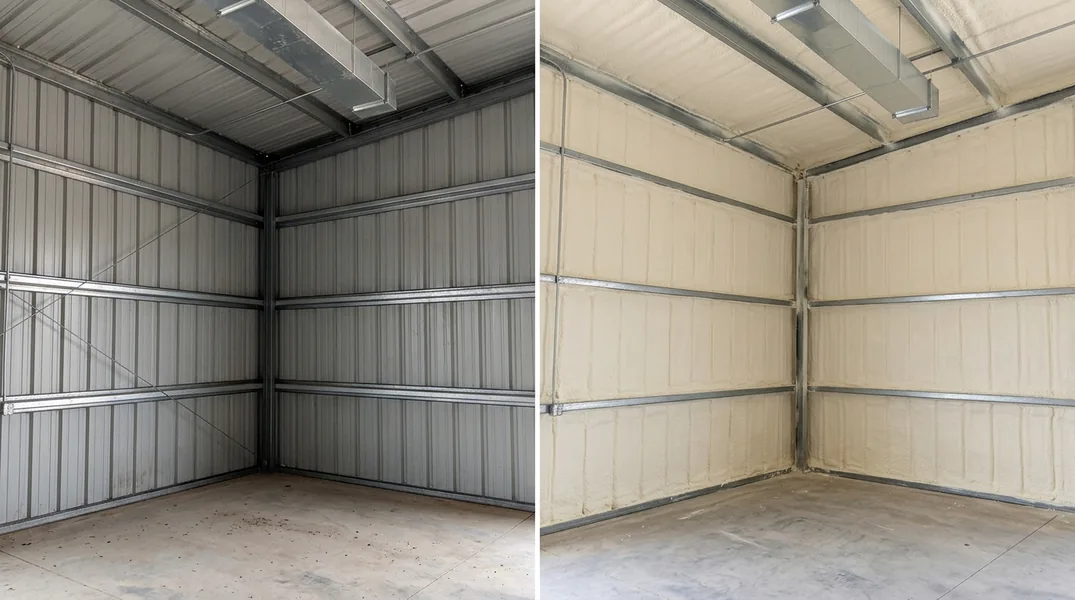
When spray foam is applied, it expands and conforms to every surface, filling voids and sealing cracks that would otherwise allow conditioned air to escape. This air sealing component is why spray foam consistently delivers better energy performance than blown in alternatives, even when the R-value appears similar on paper. A student rental that has been retrofitted with spray foam will maintain its set temperature far more efficiently, reducing heating and cooling runtime and lowering utility costs by 15 to 30 percent compared to blown in insulation.
For landlords managing multiple properties, this difference compounds quickly. Lower utility costs mean lower tenant complaints, fewer lease breakages, and better property reviews on rental platforms. The investment in Attic Spray Foam Insulation pays for itself through reduced turnover and higher tenant satisfaction.
Best Insulation for Attic Upgrades: Why Spray Foam Beats the Field
When evaluating the best insulation for attic applications, the decision should hinge on three factors: thermal performance, air sealing capability, and long-term durability. Spray foam excels in all three categories, which is why it's increasingly the choice for serious property owners who want to future-proof their investments.
Unlike blown in cellulose or fiberglass, spray foam doesn't settle, doesn't absorb moisture, and doesn't degrade significantly over decades. It provides an R-value of 3.5 to 6.5 per inch (depending on cell type), creates a complete air barrier, and requires no supplemental sealing work. The installation is professional and quick, minimizing disruption to tenants. Once applied, it requires virtually no maintenance.
If you're managing a student rental property in Lubbock and considering an attic upgrade, spray foam is the best insulation for attic spaces in older homes. The combination of superior air sealing, consistent R-value, and durability makes it the clear winner over blown in alternatives for properties where you need reliable, long-lasting performance.
Attic Spray Foam Insulation Cost in Lubbock: What to Budget
Spray foam insulation costs more per square foot than blown in insulation or fiberglass batts, typically ranging from $1.50 to $3.00 per board foot for open cell foam and $2.50 to $4.00 for closed cell foam, depending on thickness and application complexity. For a typical 1,000 to 1,500 square foot attic, you should budget between $2,000 and $6,000, with closed cell applications at the higher end.
While this is a larger upfront investment than blown in insulation (which might cost $800 to $1,500 for the same space), the return on investment is compelling for rental properties. Lower utility bills, reduced tenant turnover, fewer maintenance complaints, and the ability to command slightly higher rent all contribute to payback within 5 to 7 years. After that, the superior durability and performance of spray foam continue to deliver value year after year.
For an accurate quote tailored to your specific property, reach out to Lubbock Spray Foam Insulation at (806) 853-5452 or request a free estimate through our website. We'll assess your attic, discuss your goals, and provide transparent pricing based on your actual needs.
Attic Spray Foam Insulation Near Me: When to Call a Professional
If you own a student rental property in Lubbock and you're experiencing tenant complaints about temperature control, seeing high utility bills, or noticing signs of air leakage (drafts, condensation, or uneven heating and cooling), it's time to call a professional. Spray foam installation requires specialized equipment, proper safety protocols, and expertise to ensure the job is done correctly and safely. This is not a DIY project.
Lubbock Spray Foam Insulation has the experience and equipment to handle attic spray foam projects of any size, from small rental units to multi-unit properties. We work with property managers and landlords throughout the region to deliver insulation solutions that improve tenant comfort, reduce operating costs, and protect your investment. Contact us today at (806) 853-5452 or submit a free estimate request to get started on transforming your rental property's energy performance.
Looking for a professional spray foam insulation contractor in Lubbock? Lubbock Spray Foam Insulation responds fast for all your spray foam insulation needs.
Get a Free Quote